Mostrando entradas con la etiqueta ENVIRONMENT_A. Mostrar todas las entradas

14 nov 2012

EFFECTS OF GLOBAL WARMING

 
The planet is warming, from North Pole to South Pole, and everywhere in between. Globally, the mercury is already up more than 1 degree Fahrenheit (0.8 degree Celsius), and even more in sensitive polar regions. And the effects of rising temperatures aren’t waiting for some far-flung future. They’re happening right now. Signs are appearing all over, and some of them are surprising. The heat is not only melting glaciers and sea ice, it’s also shifting precipitation patterns and setting animals on the move.
Some impacts from increasing temperatures are already happening.
  • Ice is melting worldwide, especially at the Earth’s poles. This includes mountain glaciers, ice sheets covering West Antarctica and Greenland, and Arctic sea ice.
  • Researcher Bill Fraser has tracked the decline of the Adélie penguins on Antarctica, where their numbers have fallen from 32,000 breeding pairs to 11,000 in 30 years.
  • Sea level rise became faster over the last century.
  • Some butterflies, foxes, and alpine plants have moved farther north or to higher, cooler areas.
  • Precipitation (rain and snowfall) has increased across the globe, on average.
  • Spruce bark beetles have boomed in Alaska thanks to 20 years of warm summers. The insects have chewed up 4 million acres of spruce trees.
Other effects could happen later this century, if warming continues.
  • Sea levels are expected to rise between 7 and 23 inches (18 and 59 centimeters) by the end of the century, and continued melting at the poles could add between 4 and 8 inches (10 to 20 centimeters).
  • Hurricanes and other storms are likely to become stronger.
  • Species that depend on one another may become out of sync. For example, plants could bloom earlier than their pollinating insects become active.
  • Floods and droughts will become more common. Rainfall in Ethiopia, where droughts are already common, could decline by 10 percent over the next 50 years.
  • Less fresh water will be available. If the Quelccaya ice cap in Peru continues to melt at its current rate, it will be gone by 2100, leaving thousands of people who rely on it for drinking water and electricity without a source of either.
  • Some diseases will spread, such as malaria carried by mosquitoes.
  • Ecosystems will change—some species will move farther north or become more successful; others won’t be able to move and could become extinct. Wildlife research scientist Martyn Obbard has found that since the mid-1980s, with less ice on which to live and fish for food, polar bears have gotten considerably skinnier.  Polar bear biologist Ian Stirling has found a similar pattern in Hudson Bay.  He fears that if sea ice disappears, the polar bears will as well.

DEFORESTATION


Introduction to Deforestation


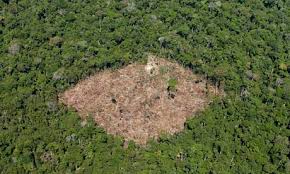
Deforestation is the permanent destruction of indigenous forests and woodlands. The term does not include the removal of industrial forests such as plantations. It has resulted in the reduction of indigenous forests to 4/5 of their pre-agricultural area.
Deforestation is a problem that is caused largely by greed and want for property, money and possibly status. In many parts of the world the forest is taken for granted as a replenishable resource, which it is. The problem is that the trees cannot be regrown and replanted at the rate at which they are being cut down.
For this reason the forests are declining at an incredible rate and there is no forseeable future for places like the Amazon which remained untouched for 20 000 years and now could be destroyed in less than a human's life time.
Deforestation is a problem with far reaching consequences ranging from a barren landscape to a higher Carbon Dioxide levels in the air. The underlying point is that we have to pull together to stop the destruction of the world's woodlands and forests.
 Causes of Deforestation


Deforestation can be attributed to various causes. The obvious one is logging, however the reasons extends a lot further than that. The forests are cultivated, cleared and burned every year for international ranchers and local farmers. Every year certain factors influence the amount of forest area:
  • fires
  • logging
  • farming
  • population expansion
  • growth of cities
  • roads and highways
  • politics
  • shifting cultivators
In a lot of third world countries the population is involved in various primary activities, one of these being logging. The native peoples in an area are put under a lot of pressure to make a living to support their families, and get jobs as loggers, often illegally so.
The people are often uneducated and know nothing other than logging practices. In many countries the logging trade is the biggest foreign money-earner and therefore governments try to exploit the forests for all they can take, and more.
Another cause is fires. In Kenya and the Amazon and various other countries there are large plantations of exotic plants in the places where there used to be indigenous forests. The exotic trees often are not suited to the environment and shed a lot of leaves. This makes the area a huge fire hazard. If a fire starts the dry leaves act like fire lighters and cause huge amounts of damage to the local area.
Human settlement is a big problem in many areas. People who have left the city to live in the rural areas claim pieces of land as their own and slash and burn the surroundings, using wood for fuel and also selling it on roadsides etc.
Some people who have been displaced by large ranchers or plantations have to move further into the indigenous forests because they do not know how to live off the exotic plants. By doing this they remove trees from yet more of the forest.
The construction of roads and highways is a bit problem in wooded areas. In the Amazon they propose to build a 960km highway called the BR-163 from Curiaba in the middle of South America to Santarem in the top right corner of Brazil. The BR-163 will allow giant grain producers in the Matto Grosso region to export their crops to Europe via Santarem far more quickly and cheaply. It is estimated that 49 000km2 of forest will be destroyed during constructon
This is not the only worry though. When the road is built there will be a wave of squatters and farmers etc. vying for land on the superhighway. This could be the single most devastating assault on the Amazon ever.
The growth of the world population is also a problem because more ground has to be cleared in order to feed the ever-growing populations. As the population grows there is a need for food. People take the initiative and buy large pieces of land that they cultivate with single crops. They have to cut down trees and bush etc. When they harvest their crop they leave the ground open to erosion.

Deforestation's effect on the environment


Deforestation is by no means a restricted problem. It can play havoc with the local community and even the country it occurs in. As with erosion, deforestation is not only caused by ignorant people. Therefore it is unfair to blame the nomads, shifting cultivators and farmers for destroying the countryside.
Deforestation is a contributing factor to the green house effect. The trees are large Carbon dioxide stores, and when the trees are burnt they release this gas. This leads too an increase in the Carbon dioxide levels in the air. Carbon dioxide is the major contributor in the green house effect.
Trees draw water up through their roots and release it into the atmosphere (transpiration). In the Amazon, half of the water is contained in the trees. If the trees are removed, the region cannot hold as much water and will become drier.
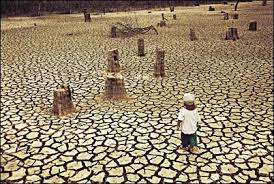
In areas where deforestation occurs the community as a whole suffers. If there are no trees, the land becomes far more unstable than before. The roots from the trees no longer exist and therefore it leaves the forest floor open to erosion and mudslides etc.
The land also becomes sandy and dry as the sun can now penetrate deep into the forest, where before, the tree-cover blocked out the damaging rays. When this occurs plants living near the cut down tree die and wither in the sun. It is believed that with every tree felled another 40 are destroyed in the process.
The local animals are effected just as much as the people. Thier natural habitats are destroyed and species, possibly unknown to man become extinct, because they have nowhere to live. When the bull dozers knock the trees down,
  • buck
  • monkeys, and
  • birds
are all caught in the destruction. The animals either end up in the cities and are killed, or they starve to death in their new surroundings.
Native people living in forest areas are pushed out of their homes and have to encroach on more of the forest. They cannot go anywhere else because they only know how to survive on the plants in the forest. In this way more forest is destroyed and the cycle will probably continue until all forests are destroyed.
To prevent deforestation is a personal undertaking, where you do your best to conserve the wood you use. You can also get involved at your school and try to get some money together and use it to buy trees to plant. You might like to write to your municipality to ask them to hold back on the cutting down of trees. You must tell everyone that you know about the effects of deforestation and explain how they can help. If you need guidance as to how to go about preserving nature, ask an adult or teacher. Always try to limit the wood etc, that you use. Do not by excessive amounts of wooden items as this only encourages the people who own timber mills and logging companies.

EFFECTS OF OVERPOPULATION ON THE ENVIRONMENT


6.5 billion…This is not a whole lot of bacteria, but when it comes to humans, it is a very formidable number. The human population has been increasing at an extremely high rate in the last century and unfortunately, not much has been done to slow down this process. Undoubtedly, overpopulation is a global issue. It is global because it pertains to all of humanity, but global also means that it affects the whole world, i.e. the environment. Almost all human activities impact negatively the environment in one form or another, and as human population expands, the damaging effects on the environment multiply. Here are some of the most imminent environmental problems that results from human population growth:

1. Water supply. Water is one of the basic elements of live, and it is needed to preserve the balance of every ecosystem. It cools down and cleanses the environment and is used by plants and animals to carry out vital functions. As human population increases, so does the consumption of water. In the past fifty years, the per capita availability of fresh water has decreased by one third.* Fresh water supply is a problem in most of the developing countries, especially those located in arid climates such as in Africa, South America and Asia. In some African countries, fresh water needs to be carried daily from sources more than two hours walking distance. Water supply is an issue in urban areas as well. In Beijing, the water table falls down with as much as two meters annually.*


2. Water pollution. The problem with water is not only overconsumption, but also pollution. "More than 95% of urban sewage in developing countries is discharged untreated into the nearest waterway or field."* The main contributors to water pollution are factories and open mines, discarding waste water with heavy metals, toxic substances and solid waste, which are virtually impossible to purify. The situation is even worse when it comes to ocean exploitation and pollution. Overfishing changes the balance in coastal ecosystems and decreases fish populations. Sometimes it might even lead to extinction of certain marine species. Overfishing also damages coral reefs, because it allows algae to overgrow them. It turns out that the ocean is "the ultimate garbage dump "* because eventually all of the sewage, sediment from forest clearing, fertilizer and pesticide run-off flow into it. It is important to preserve the ocean, not only because it is an important source of food, but also because it plays a major role in climate regulation. The circulation of cold and warm water protects the earth from extreme temperature fluctuations. In addition, oceans absorbs between 30 and 40% of the CO2 given off as a result of human activity, thus keeping global warming at stake.


3. Soil Degradation.
Population growth results increases the demand for food production. Since the arable land in many of the overpopulated regions is limited, farmers begin to cultivate dry, hilly, nutrient-poor areas that are not very suitable for farming. Exploiting such lands makes them easily susceptible to erosion and loss of nutrients. For example, in search for farmland in Indonesia, peasants have been planting their crops on steep slopes. As a result, almost one half of Java's land is now in danger of erosion.* Globally, the statistics are even more frightening. It is estimated that 1.2 billion hectares of land, approximately the size of Europe, U.S. and Mexico combined, have lost much of their agricultural output capability in the last 50 years.*


4. Deforestation.
The search for more farmland causes other damaging agricultural practices such as slash-and-burn cultivation. Basically, a forest area is burned and converted into pasture, but due to poor soils, it looses its productivity in about three years.* This initiates a vicious circle which results in the deforestation of large areas, mostly in tropical regions. Deforestation is also caused by the use of wood as fuel, since 9 out of 10 African households use wood for cooking and heating. This is the reason why Ghana lost almost a third of its dense forest from 1938 to 1980.* In addition, the building of roads and the expansion of residential areas have contributed to the loss of primary forest.


5. Loss of biodiversity.
All of the previously described effects of overpopulation on the environment lead to the destruction of the natural habitat of many wildlife species. The natural flora and fauna have been under constant pressure to adapt to a quickly changing environment. Since they have been unable to do so, they have been displaced from their natural ecological niche. The constant clearing of the Amazon forest has had devastating effect on many rare tropical species. It has been estimated that 10% of the species in the region have become extinct.*

IMPACT OF OVERPOPULATION


What impact does overpopulation have on the economy?
Overpopulation has a definite effect on a country’s economy.  First of all, when countries are overpopulated, the hardly have enough food to support themselves, never mind the hope of having a surplus to sell.  This can contribute to a low GDP per Capita which is effect overpopulation has on the economy.  In an attempt to save the people from the starvation, the government will most likely have to rely on foreign debt.  This puts the country in debt at stretches the government’s already meagre resources.  Furthermore, when a country is overpopulated, there is a high rate of unemployment because there just aren’t enough jobs to support the population.  This results in a high level of crime because the people will need to steal things in order to survive. 
What impact does Overpopulation have on the environment?
Overpopulation does not just affect the standard of living, but also the environment. Every person on the planet takes up space, but space is needed for farmland, and forests. People excrete wastes and pollution that flow into water systems, and animal habitats, polluting water, and killing wildlife. Many people cannot bathe or brush their teeth because of the status of the water in their land.
         Forests are being torn down as more wood and land is needed to support our ever-growing population. The loss of these forests leads to extinction of plants and animals. These plants could contain cures for diseases that will never be found.
         Urban areas are expanding, polluting the air and water systems. These areas deplete the Earth’s resources, and over 2 billion hectares of arable land have already been lost, with 16 million more hectares being removed each year. In Nigeria alone, 351 000 ha of land are being removed every year.
51% of the fossil fuels on Earth are being used by USA and China alone, leaving less than half for the remaining countries, including those in Africa. In fact, most of those remaining fossil fuels go to other developed countries, leaving a dismal amount for Africans.
What impact does overpopulation have on politics?

 Governing an overpopulated country presents problems. The economy is stretched beyond belief, and civil wars break our  left, right, and centre. These civil wars are fought over farmland, and the people spend so much time fighting, that the farmland is not even put to use. Important fossil fuels need to be traded away for pitiful amounts of cash used to no avail. The government of an overpopulated country falls into constantly increasing debt, and cannot climb back up out of the hole they have dug.

THE EFFECTS OF NOT RECYCLING WATER BOTTLES


Most plastic water bottles are recyclable, and yet most of them are never recycled and end up in the garbage. According to the Container Recycling Institute, consumers recycle only one of every five plastic drink bottles used. Though recycling facilities aren't available everywhere, it's important to try to recycle as many water bottles as possible. Not doing so can have disastrous consequences for our land, water and wildlife.

Landfill Waste

Throwing away plastic bottles, instead of recycling them, means the bottles end up in landfills, many of which are already overcrowded and take up space that could be used for other purposes. Conventional plastic does not biodegrade, so the bottles sit in landfills indefinitely. Landfill waste contributes to the production of methane, and too much methane in the atmosphere leads to the greenhouse effect, which is linked to global warming.

Chemical Leaching

It's tempting to reuse a water bottle several times before throwing it out, but invisible scratches and cracks in the flimsy plastic can cause harmful chemicals from the plastic to leach into your drink. It's better to recycle the bottle after the first use. If you do choose to reuse water bottles, make sure to wash and sanitize them thoroughly; not doing so can make them a breeding ground for bacteria that could make you sick.

New Production

When water bottles are not recycled, brand-new ones must be made to keep up with consumer demand. According to the Earth Policy Institute, 1.5 million barrels of oil are needed to make enough bottles to meet the U.S.' demand for bottled water. Increasing recycling efforts -- or consuming more tap water and bottled water -- cuts down on the need for raw materials and fossil fuels to make new products.

Ocean Effects

Trash in coastal cities often ends up in our oceans, and ocean animals are hurt and killed by ingesting small bits of residual plastic. Small ocean life can get stuck in the cap rings of plastic water bottles or in plastic six-pack holders. An animal may mistake a plastic bottle for prey and try to eat it, with disastrous consequences.

7 ENVIRONMENTAL PROBLEMS THAT ARE WORSE THAN WE THOUGHT


With as much attention as the environment has been getting lately, you’d think that we’d be further along in our fight to preserve the world’s species, resources and the beautiful diversity of nature. Unfortunately, things aren’t nearly that rosy. In fact, many of the environmental problems that have received the most public attention are even worse than we thought – from destruction in the rain forest to melting glaciers in the Arctic. We’ve got a lot of work to do.
7. Mammal Extinction

One in four mammals is threatened with extinction. That’s 25%, a huge number that will totally change the ecology of every corner of the earth. We could see thousands of species die out in our lifetime, and the rate of habitat loss and hunting in crucial areas like Southeast Asia, Central Africa and Central and South America is growing so rapidly, these animals barely have a chance.
If you think the extinction of an animal like the beautiful Iberian Lynx is no big deal, and wouldn’t have that much of an effect on the planet, think again. Not only would we be losing – mostly due to our own disregard for our surroundings – so much of the awe-inspiring diversity of nature, mass extinctions like this would cause a serious imbalance in the world’s food chain. When a predator disappears, the prey will multiply. When prey dies out, the predator will see its ranks decrease as well. Many people fail to realize just how interconnected all species on this planet really are.
6. The Ocean Dead Zones

In oceans around the world, there are eerie areas that are devoid of nearly all life. These ‘dead zones’ are characterized by a lack of oxygen, and they’re caused by excess nitrogen from farm fertilizers, emissions from vehicles and factories, and sewage. The number of dead zones has been growing fast – since the 1960’s, the number of dead zones has doubled every 10 years. They range in size from under a square mile to 45,000 square miles, and the most infamous one of all is in the Gulf of Mexico, a product of toxic sludge that flows down the Mississippi from farms in the Midwest. These ‘hypoxic’ zones now cover an area roughly the size of Oregon.
Spanish researches recently found that many species die off at oxygen levels well above the current definition of ‘uninhabitable’, suggesting that the extent of dead zones in coastal areas that support fishing is much worse than previously thought. Robert Diaz, a Virginia Institute of Marine Science biologist, said “Everything is pointing towards a more desperate situation in all aquatic systems, freshwater and marine. That’s pretty clear. People should be worried, all over the world.”
As if that weren’t bad enough, global warming will likely aggravate the problem. A rise in carbon dioxide in the atmosphere will change rainfall patterns, which could create an increase in runoff from rivers into the seas in many areas.
5. Collapsing Fish Stock

Millions of people across the world depend upon fish as a major staple in their diet. As such, commercial fishermen have been pulling such a huge quantity of fish from the oceans that we’re heading toward a global collapse of all species currently fished – possibly as soon as the year 2048. Like large-scale mammal extinction, the collapse of fish species would have a major impact on the world’s ecosystems.
It’s not too late – yet – if overfishing and other threats to fish populations are reduced as soon as possible. Marine systems are still biologically diverse, but catastrophic loss of fish species is close at hand. 29 per cent of species have been fished so heavily or have been so affected by pollution that they’re down to 10 per cent of their previous population levels. If we continue the way we are fishing today, there will be a 100 per cent collapse by mid-century, so we’ve got to turn this around fast.
4. Destruction of the Rain Forest

‘Saving the rain forest’ has been at the forefront of the environmental movement for decades, yet here we are facing huge losses in the Amazon all the same. You might have thought that, with all the attention the rain forest has gotten, it wouldn’t need so much saving anymore – but unfortunately, global warming and deforestation mean that half of the Amazon rain forest will likely be destroyed or severely damaged by 2030.
The World Wildlife Fund concluded this summer that agriculture, drought, fire, logging and livestock ranching will cause major damage to 55 percent of the Amazon rain forest in the next 22 years. Another 4 percent will see damage due to reduced rainfall, courtesy of global warming. These factors will destroy up to 80 percent of the rain forest’s wildlife. Losing 60 percent of the rain forest would accelerate global warming and affect rainfall in places as far away as India. Massive destruction to the rain forest would have a domino effect on the rest of the world.
The WWF says that the ‘point of no return’, from which recovery will be impossible, is only 15 to 25 years away.
3. Polar Sea Ice Loss

Polar sea ice is melting at an unprecedented rate, and it’s not showing any signs of slowing down. It’s perhaps the most dramatic, startling visual evidence of global warming, and it’s got scientists rushing to figure out just how big of an effect the melting is going to have on the rest of the world.
British researchers said last week that the thickness of sea ice in the Arctic decreased dramatically last winter for the first time since records began in the early 1990s. The research showed a significant loss in thickness on the northern ice cap after the record loss of ice during the summer of 2007.
Scientific American warns that “human fingerprints have been detected” on both the Arctic and Antarctic regions. Antarctica had previously appeared to be the only continent on the planet where humanity’s impact on climate change hadn’t been observed. The collapse of the Larsen B and Wilkins ice shelves in the Antarctic Peninsula shows just how fast the region is warming.
2. CO2 Levels in the Atmosphere

The afore mentioned polar sea ice loss is yet another sinister sign of carbon dioxide levels building up in the atmosphere – the main force behind global warming. Greenhouse gas emissions caused by our modern way of life – vehicles, power plants, factories, giant livestock farms – will bring devastating climate change within decades if they stay at today’s levels.
Average temperatures could increase by as much as 12 degrees Fahrenheit by the end of the century if emissions continue to rise, a figure that would easily make the world virtually uninhabitable for humans. A global temperature rise of just 7.2 degrees Fahrenheit would cause a catastrophic domino effect, bringing weather extremes that would result in food and water shortages and destructive floods.
The most recent report by the Intergovernmental Panel on Climate Change represents “the final nail in the coffin” of climate change denial, representing the most authoritative picture to date that global warming is caused by human activity. According to the panel, we must make a swift and significant switch to clean, efficient and renewable energy technologies in order to prevent the worst-case scenario.
1. Population Explosion

Whether we like to admit it or not, our very own rapidly multiplying presence on this planet is the biggest environmental problem there is, and it’s getting bigger by the minute. We voraciously consume resources, pollute the air and water, tear down natural habitats, introduce species into areas where they don’t belong and destroy ecosystems to the point of causing millions of species to become endangered and, all too often, go extinct.
It took nearly all of human history – from the first days of man on earth until the early 1800’s – to reach a global population of 1 billion. In just 200 years, we’ve managed to reach 6.5 billion. That means the population has grown more since 1950 than in the previous four million years. We’re adding roughly 74 million people to the planet every year, a scary figure that will probably continue to increase. All of those mouths will need to be fed. All of those bodies will need clean water and a place to sleep. All of the new communities created to house those people will continue to encroach upon the natural world.
All seven environmental problems detailed above are very serious, and we’ve got to start treating them that way. We may not have easy solutions, but the fact is, we simply can’t continue living our lives as if everything is peachy. These problems aren’t going to magically solve themselves. We should have begun acting generations ago, but we can’t go back in time, and that means we have to step up our efforts. If we want to keep this planet a healthy place for humans to live – for our grandchildren to enjoy – it’s time to buckle down and do everything in our power to reverse the damage we’ve done.